
With over a decade of experience in Product Management and User Experience Design, I’ve contributed to dozens, if not hundreds, of initiatives spanning internal tools, customer-facing systems, and operational platforms. What follows is a curated set of highlights rather than a comprehensive catalog of my work. Across these efforts, I’ve consistently owned products end-to-end: from opportunity discovery and business case development through delivery, change management, performance evaluation, and executive-level readouts. My role routinely extended beyond traditional Product Management, encompassing stakeholder alignment, outcome measurement, and hands-on collaboration with design, engineering, and operations to ensure solutions delivered measurable business value.
My path into Product Management and Design was shaped by a deep interest in improving real-world user experiences at Custom Ink. Starting as a Production Artist, I developed firsthand insight into the pain points created by internal tools that had been built ahead of clearly defined workflows. These systems represented high-impact opportunities for user-centered redesign, process optimization, and organizational alignment. By pairing frontline operational knowledge with UX research and systems thinking, I helped surface unmet needs and translate them into actionable product strategies.
As my scope expanded, I moved from localized improvements to leading cross-functional initiatives across Custom Ink’s broader ecosystem of tools and services. In my role as a Process Engineer turned Product Manager, I partnered closely with Production, Art & Design, Engineering, and Vendor Management to modernize workflows and the platforms that supported them. These efforts included redesigning core art tools that ultimately tripled departmental productivity; overhauling internal notes systems to reduce friction and miscommunication, cutting errors by more than 50% while increasing company-wide efficiency; and designing a new internal feedback platform that increased constructive feedback by 50% and positive feedback by over 100%. I also led workflow discovery and tool redesign efforts that enabled teams to adopt modernized machinery, doubling production throughput.
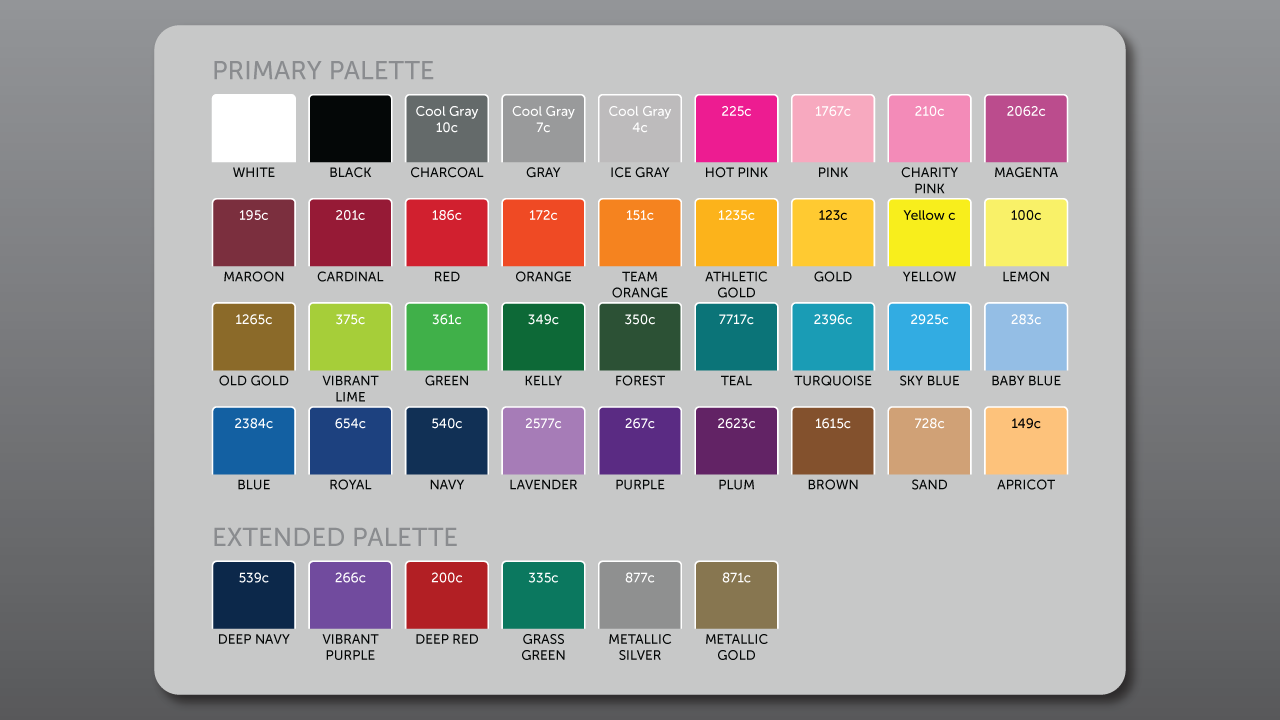
One of my most impactful initiatives involved taking ownership of Custom Ink’s color palette—a deceptively complex, long-standing challenge. Acting as product owner, I drove alignment across creative, technical, operational, and vendor stakeholders to define success metrics, validate constraints, and deliver a scalable solution. The resulting palette increased customer satisfaction with final print colors by 120%, reduced rework and reprints by 50%, and lowered ink costs by 20%, ultimately saving the company millions of dollars while materially improving the customer experience.
Following Custom Ink, I briefly supported the Product Management organization at Berkeley Insurance, where I provided strategic recommendations around prioritization, roadmap clarity, and engineering pipeline optimization to improve delivery efficiency and focus before moving on.
Today, as a Marketing Account Manager at Yardi Systems, I continue to apply a Product Management and UX-driven mindset beyond traditional marketing execution. I work with clients to treat their property websites as living products—applying agile principles, data-informed prioritization, accessibility best practices, and continuous improvement strategies. By looking beyond surface-level SEO and content tactics, I help clients drive sustained engagement, improve usability, and increase traffic through thoughtful, user-centered iteration over time.

Custom Ink: Internal Notes Service
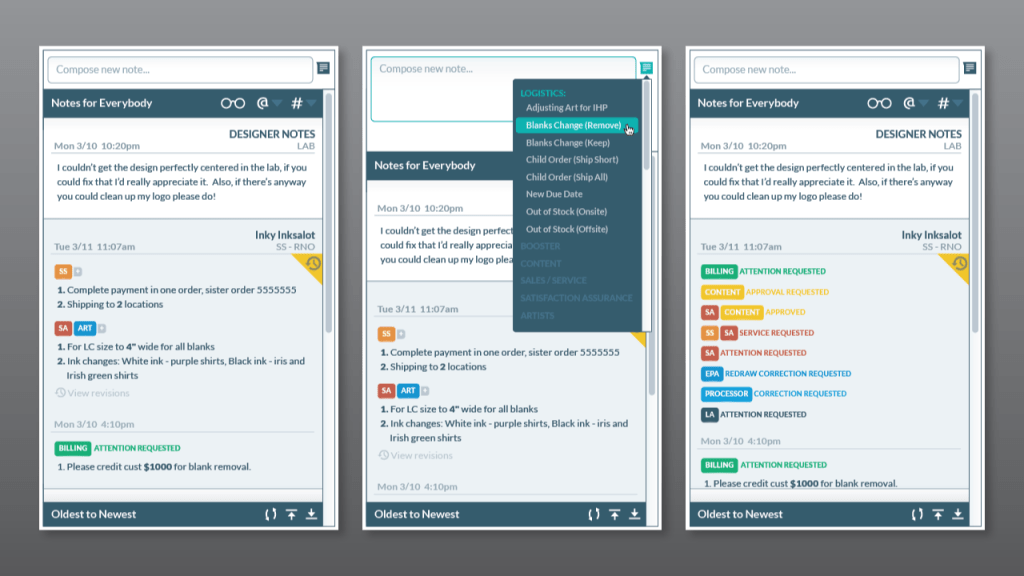
Custom Ink’s internal notes ecosystem grew organically across teams, resulting in inconsistent formats, unclear ownership, and critical information being missed or misinterpreted. Notes were shared broadly, but there was no structured way to target specific departments, roles, or individuals, creating friction and downstream errors in production and fulfillment. I identified this as a classic information architecture and communication breakdown problem and led the effort to redesign the service from the ground up. I gathered stakeholder requirements across teams, defined success criteria, and designed a standardized, flexible notes framework that introduced tagging, audience targeting, and clearer visual hierarchy. In addition to producing end-to-end UX mockups, I authored the supporting business case to align leadership on the investment, positioning the project as a risk-reduction and efficiency initiative rather than a cosmetic redesign.
Custom Ink: Internal Feedback Platform
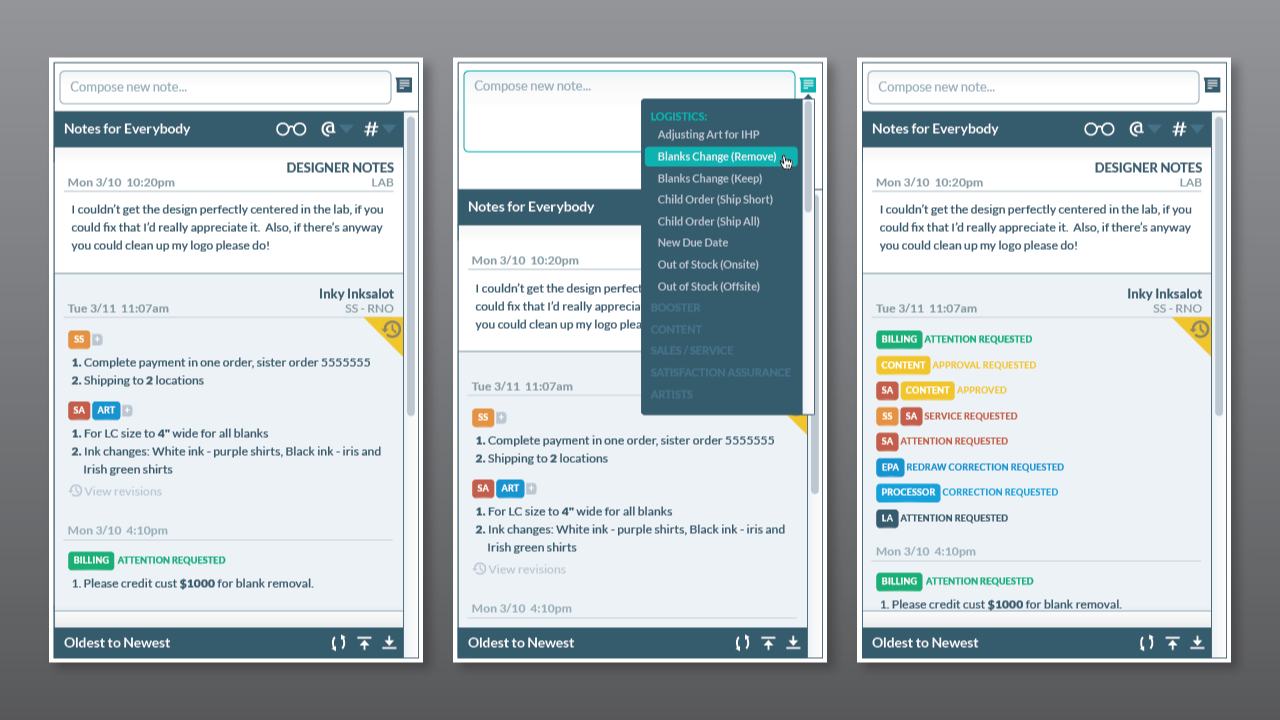
While candid feedback was a core part of Custom Ink’s culture, the existing processes unintentionally discouraged participation and reinforced negative habits around giving and receiving feedback. Employees often found the experience uncomfortable, time-consuming, or overly transactional. This project was inspired by the opportunity to use product design to reinforce cultural values at scale. Partnering closely with the internal UX team, I helped design a new feedback platform that reframed feedback as lightweight, approachable, and even enjoyable. We focused on reducing cognitive load, normalizing positive reinforcement, and guiding users toward more constructive input through thoughtful prompts and flows. I created the core mockups and flows, then acted as both product owner and internal evangelist—traveling to Custom Ink facilities nationwide to demo the tool, provide training, and gather live feedback. This hands-on rollout ensured strong adoption and reinforced trust in the platform.
Custom Ink: Production Engine
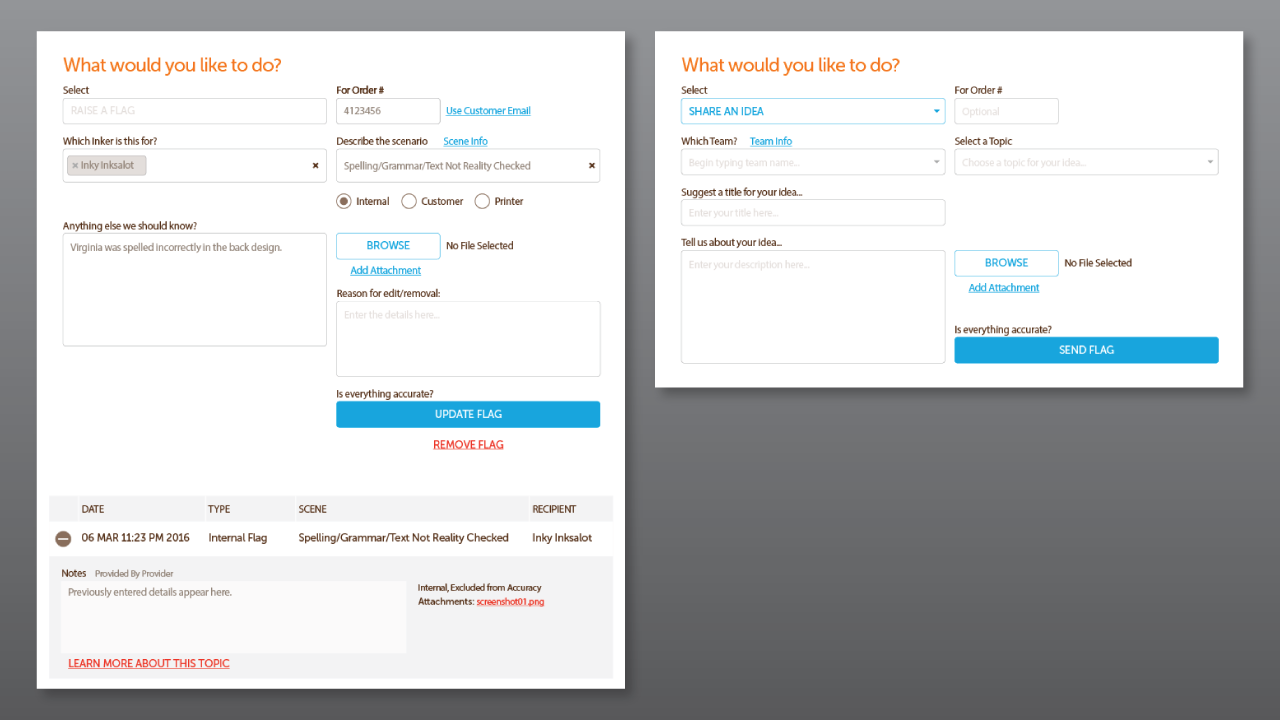
As Custom Ink’s production teams prepared to invest in modernized machinery—new printers, curing stations, and dryers—it became clear that the existing production software could not support the new workflows these machines required. Rather than forcing teams to adapt to outdated systems, this project flipped the model: the workflow came first, and the software was designed to support it. I partnered directly with production teams to map current and future-state workflows, identify bottlenecks, and define system requirements grounded in real operational needs. From there, I led the design of a new production engine that aligned digital tooling with physical processes, enabling teams to fully leverage their upgraded equipment. The result was a tightly integrated system that reduced friction, improved throughput, and allowed production to scale alongside hardware investments.
Custom Ink: Color Palette Redesign
Color had been a long-standing pain point at Custom Ink since the company’s inception, touching nearly every stakeholder group. Customers were dissatisfied with how certain colors printed, the Art team lacked the range and flexibility they wanted, and vendors struggled with consistency and cost when mixing or matching inks. Recognizing this as both a UX and systems problem, I led a six-month research initiative to reimagine the company’s color palette from the ground up. This work included deep collaboration with Art & Design, Production, Engineering, and Vendor Management, as well as extensive analysis of customer feedback, print outcomes, and manufacturing constraints. The final palette balanced creative flexibility, production feasibility, and customer expectations, transforming a historically contentious issue into a shared win across teams while delivering significant cost savings and quality improvements.
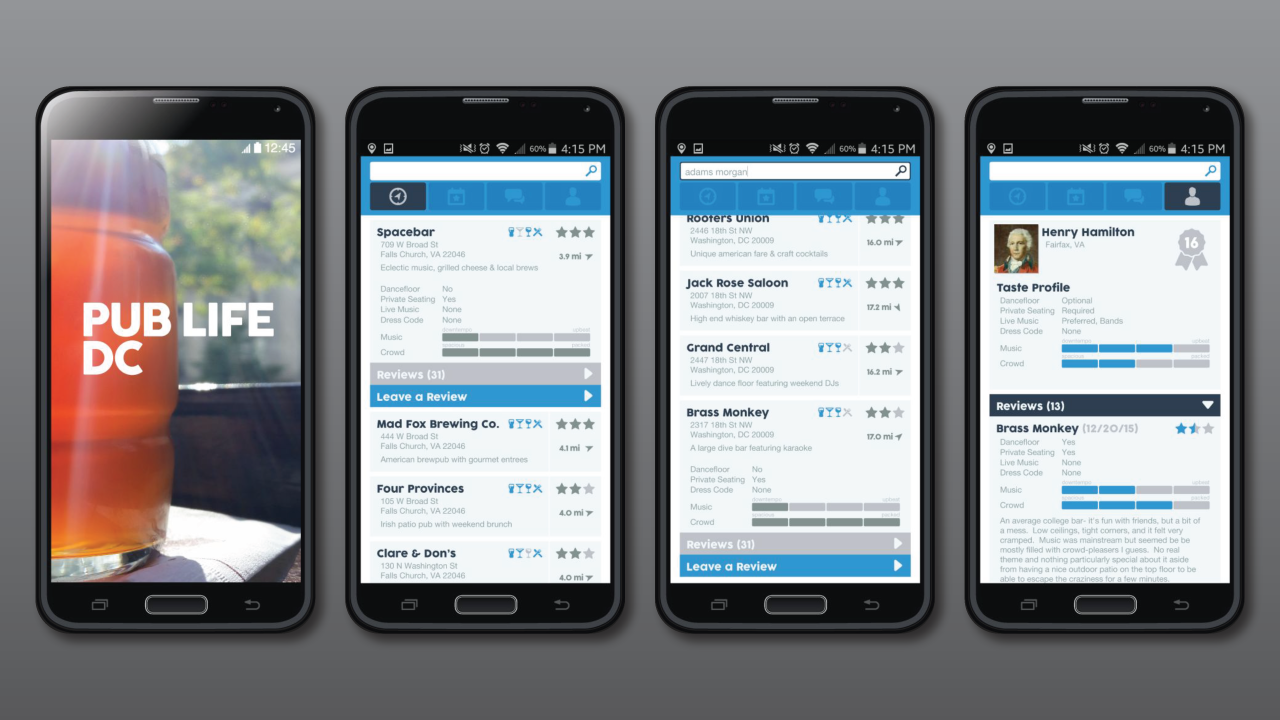
UX Certification Project: Restaurant & Nightlife Discovery App
As part of my UX Design certification, I designed an end-to-end mobile app concept aimed at solving a personal and widely shared frustration: discovering restaurants and nightlife based on “vibe” rather than generic star ratings. Traditional platforms often optimize for popularity, not fit, leaving users overwhelmed or disappointed. I began by defining personas and conducting market and competitive research to understand how users make social and experiential decisions. From there, I designed the information architecture and user flows to emphasize mood, context, and intent, allowing users to discover places that matched how they wanted to feel—not just what was rated highest. I produced high-fidelity mockups and a clickable prototype that demonstrated the full experience, from onboarding through discovery and decision-making, showcasing a user-centered approach grounded in research, storytelling, and interaction design.
 Kalamon Design